

When people hear the word improv, they often imagine performers being put on the spot, trying desperately to be funny with no plan.
That image keeps a lot of people from taking an improv class or attending a show.
But that version of improv isn’t very accurate.
So what is improv, really?
Improv is Not Stand-Up Comedy
Let’s start by clearing this up.
Improv is not:
Telling jokes
Delivering punchlines
Preparing material ahead of time
Being “on” all the time
Competing for laughs
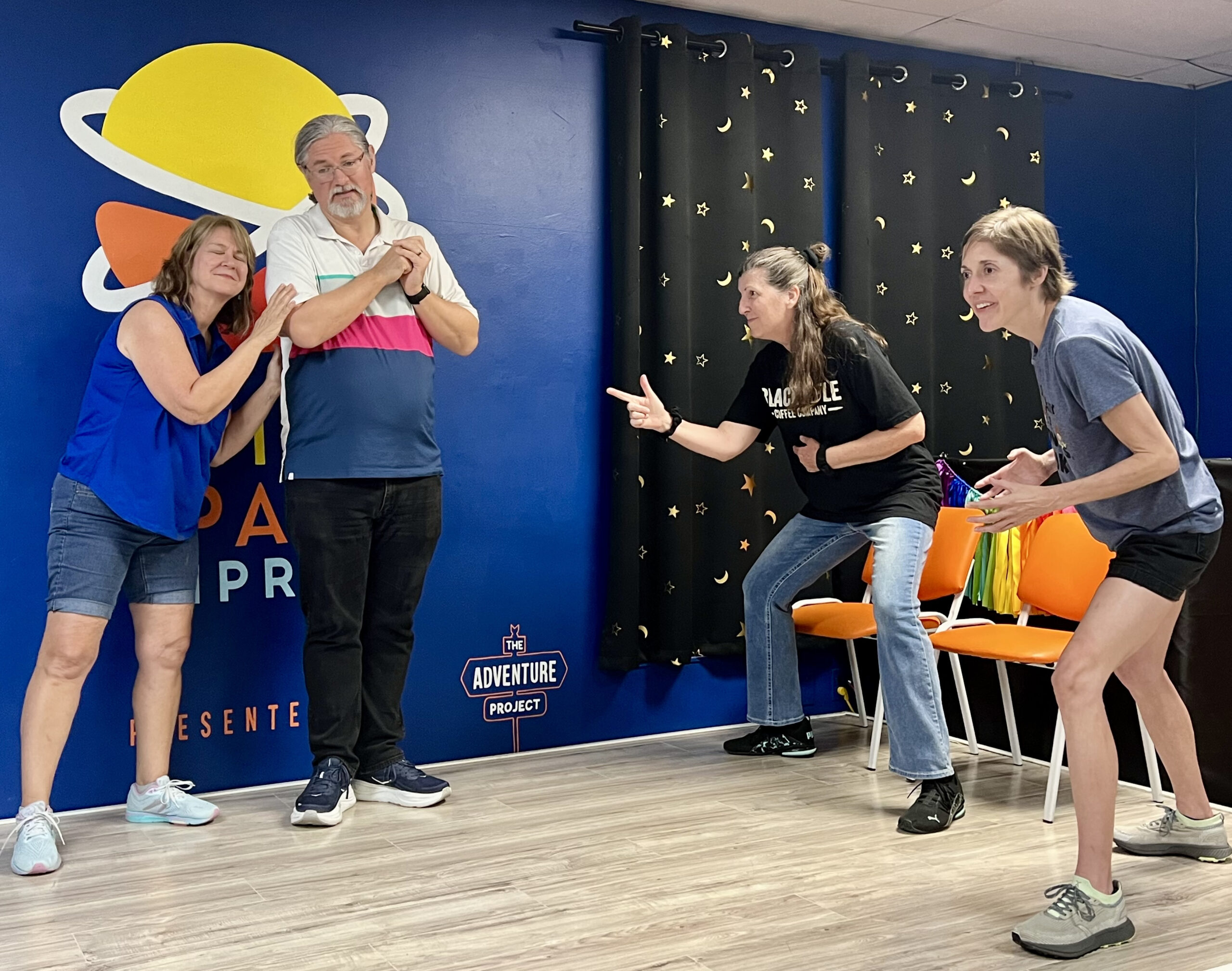
In improv, performers aren’t trying to be funny on their own. They’re working together to create scenes, characters, and stories in the moment.
The humor comes from honesty, connection, and surprise — not from trying to be clever.
Improv is Collaborative Storytelling
At its core, improv is:
Collaborative storytelling created in real time.
Performers listen, respond, and build off each other’s ideas using a simple principle often called “Yes, And.”
“Yes, And” means:
Accepting the reality someone offers
Adding something that moves the offer forward
This mindset keeps scenes moving and enables trust to form between players.
Improv is a Learnable Skill (Not a Talent)
One of the biggest myths about improv is that you have to be naturally funny to do it.
You don’t.
Improv teaches skills that anyone can learn:
Listening
Supporting others
Making clear choices
Letting go of perfection
Being present
That’s why improv classes attract:
adults trying something new
professionals improving communication
people looking for community
beginners with no performance experience
Improv is Structured (Even Though it Looks Spontaneous)
Good improv isn’t chaos.
Behind every great scene are:
clear agreements
simple rules
supportive partners
Improv classes break these skills down step by step, so beginners feel safe and successful from day one.
Improv is About Connection, Not Pressure
In a supportive improv environment, no one is:
put on the spot
mocked
embarrassed
left hanging
Instead, performers and students learn how to:
trust themselves
trust the group
recover gracefully from mistakes
At Third Space Improv in St. Augustine, we often say: “The goal isn’t to be funny. The goal is to be connected.”
So Why Do People Laugh So Much?
Because connection is funny.
When people:
truly listen
respond honestly
commit fully
…humor naturally follows.
That’s why improv shows feel alive and why improv classes feel joyful, energizing, and surprisingly meaningful.
Improv is for More Than the Stage
The same skills used in improv apply to:
workplace communication
leadership
relationships
creativity
confidence
That’s why improv is used in corporate training, education, therapy-adjacent practices, and community building.
Experience Improv for Yourself
You can experience improv in two ways:
Attend a live show and watch the collaboration unfold
Take a beginner improv class and experience it firsthand
Both are welcoming, low-pressure ways to step into something new.
Curious About Improv in St. Augustine?
Whether you’re looking for:
a fun night out
a creative outlet
new friendships
personal or ofessional growth
Improv might be exactly what you’re looking for – jump in!