

What Actually Happens at an Improv Comedy Show (and Why You Don’t Need to be “Funny”)
If you’ve never been to an improv comedy show, you might be wondering one very important thing:
“Am I going to get called on stage?”
Let us put you at ease right away — no one is ever forced to participate.
At Third Space Improv, audience participation is always optional, always gentle, and always meant to be fun. Most of the time, participation looks like calling out a suggestion from your seat — a place, a relationship, or a random word. That’s it.
The performers do the rest.
So… what actually happens?
-
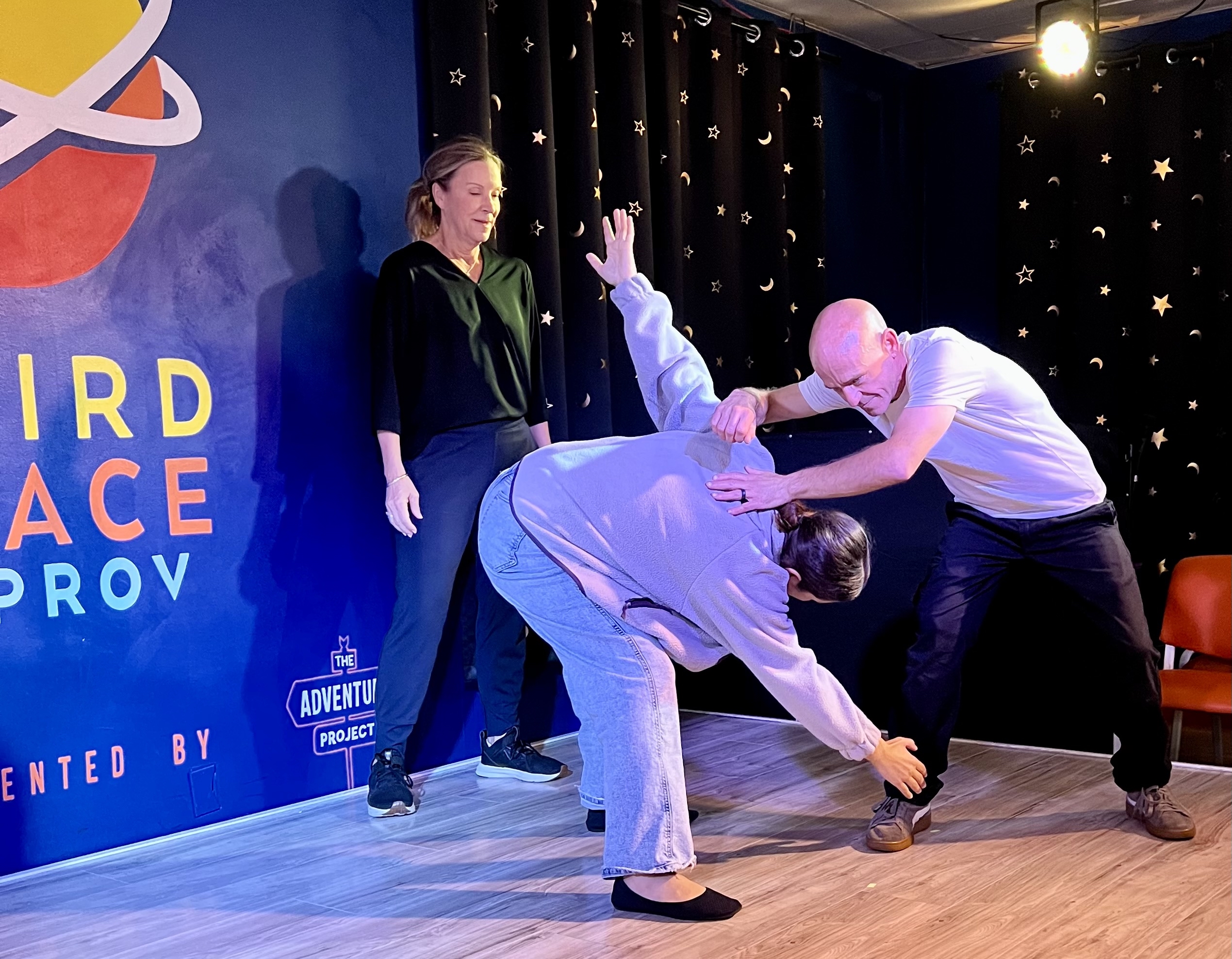
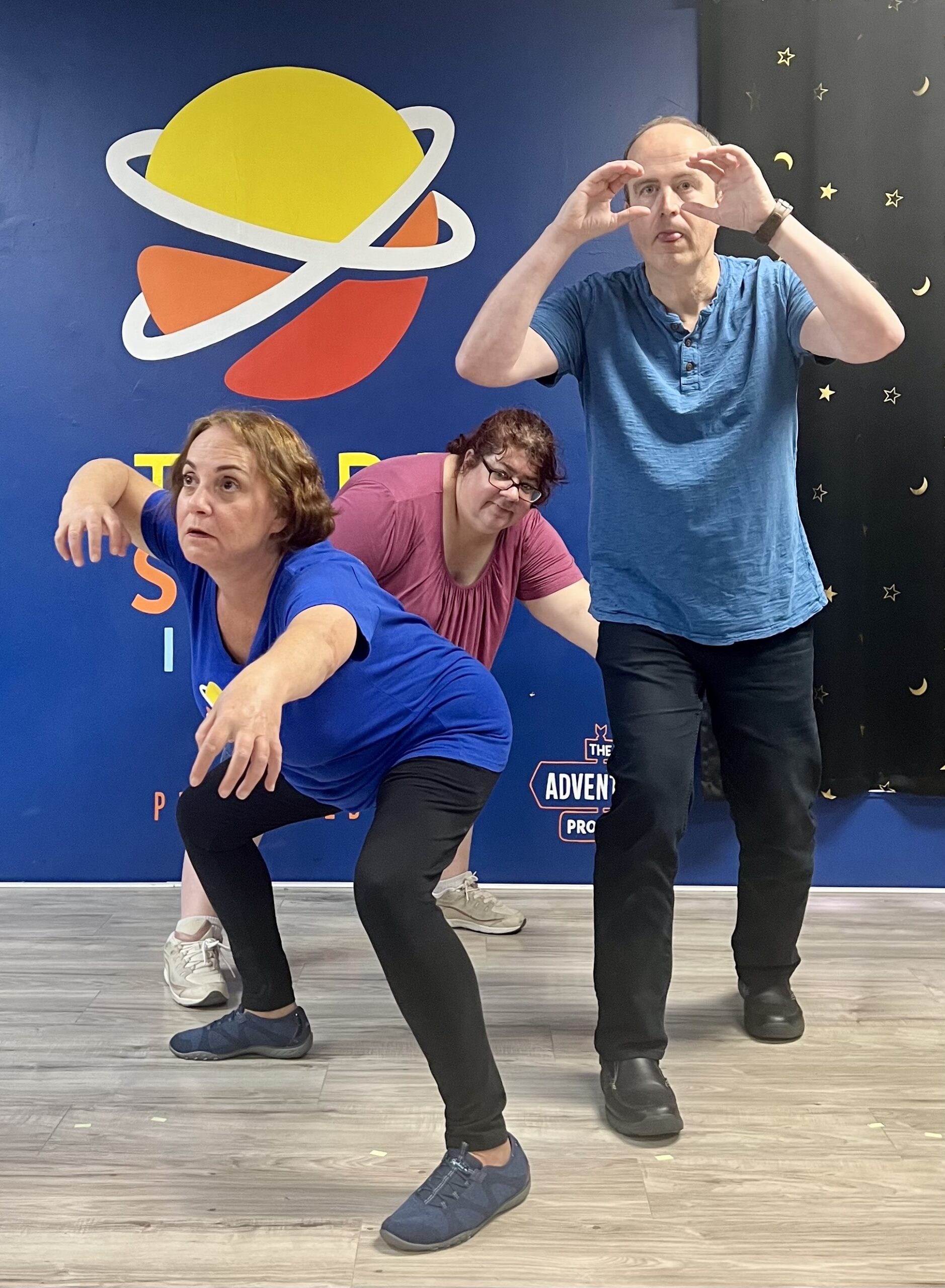
The cast comes out and plays improv games or creates unscripted scenes
-
The audience offers suggestions (if they want to)
-
Scenes, characters, and relationships are made up on the spot
-
Laughter happens naturally — no pressure required
You don’t need to be funny.
You don’t need to be outgoing.
You don’t need to “know improv.”
You just need to show up.
Our shows are designed to be fun, inclusive, and welcoming, whether it’s your first improv show or your 50th. Families, visitors, locals, introverts, extroverts — everyone belongs here.
If you’ve ever avoided improv because you were nervous about participation, our Saturday night shows are the perfect place to start. You can sit back, relax, and enjoy the ride. (Once in a while we ask for an audience volunteer on stage – we only invite you if you want to be there!)
Come see what improv comedy is really like — and why so many people leave saying, “That was way more fun than I expected!”
Exploring the World of Improvisational Comedy
If you’ve always enjoyed improv or are simply interested in comedy, understanding the different improv formats can make your first improv show or your first comedy outing even better. As a leading topic on our improv blog, we often explain the types of improv you might see on stage when you visit a local improv theater (or improv theatre, depending on your preferred spelling!).
Short-Form Improv vs. Long-Form Improv
Most improv groups perform two main styles. Short form improv (often referred to as the improv – short style) consists of quick, punchy short form games. You’ve likely seen good examples of this style of improv on the popular television show Whose Line Is It Anyway? (yes, the classic Whose Line Is It Anyway). These short form shows rely heavily on a direct suggestion from the audience to inspire fast-paced games like “scenes from a hat.”
On the other hand, long form improv focuses on longer, interconnected scenes. A long form piece might look like a full show without a script. Pioneers like Del Close, and famous institutions like the Upright Citizens Brigade and Second City, helped popularize this long-form format. While short form is quick, long form shows build deep characters and a continuous narrative. Sometimes, a troupe will perform narrative improv that looks just like an unscripted play!
How Improv Differs From Stand-Up and Sketch
If you are attending your first show or a major improv festival, you’ll notice improvisational comedy is entirely different from stand-up comedy or sketch comedy. A traditional comedy show might feature a comic delivering written jokes, or actors performing a rehearsed sketch. In improvised theatre, everything is made up on the spot.
Improvisers don’t use a script. Many improv shows feature scenes completely based on an audience suggestion. The cast will ask the audience for an idea, and that audience suggestion becomes a core part of the show. Performers use object work (miming props), high-level teamwork, and rapid comedic acting to build improv scenes. They must remain incredibly present in the moment to improvise effectively. It’s pure impro and true improvisation!
Ready to Learn Improv?
If watching the comedic magic inspires you, you can take a class at our training center. Whether you want a kick-ass improv class or are looking for a level 1 basic improv course, our comedy school has you covered. Using improv principles isn’t just for actors; the history of improv reveals its deep roots in drama therapy and traditional acting training.
An experienced acting teacher will guide you through the exercises we create in class. Proper improv training and improv will teach you invaluable improv skills and highlight how improv puts you in tune with others. Even if the idea of getting on stage improv still scares you, taking that first step to learn improv can transform how you communicate and collaborate.